






Keith Adams
Research Interests My research interests intersect among genomics, molecular evolution, and molecular genetics. My lab’s research is in the areas of genome evolution, molecular evolution, and gene expression – transcriptomics. We study how gene expression patterns, regulation, alternative splicing, and functions evolve. We focus on genes duplicated by whole genome duplication (polyploidy) and other duplication mechanisms at […]

Coralie Salesse-Smith
Research interests One aspect of ensuring future food security is the ability to produce more crop products using fewer resources – such as land, water, and fertilizer – in the face of climate change. In the Salesse-Smith lab, we are helping to address this challenge by using synthetic biology to study the molecular mechanisms of carbon […]
Jacob Moutouama
Research Interests We are interested in investigating the abiotic and biotic drivers of species’ distributions, with a focus on how global change influences species range limits and extinction risk. We are also interested in understanding the mechanisms underlying plants use by indigenous communities in tropical regions. Our research combines demographic data, manipulative lab and field experiments, and […]
Monika Fischer
Research Interests Monika is a mycologist who is passionate about understanding the biological mechanisms that drive ecological processes. Our lab seeks to understand what it means to be a fire-adapted fungus, and the role(s) that these fungi play during post-fire recovery. Fire-loving fungi are highly active within days following fire, including the model organism, Neurospora […]
Wayne Maddison
Research Interests My research arose from a fascination with the diversity of forms and behaviours of jumping spiders, which led to systematics, which led to phylogenetic theory and computer programming. My work continues to be both empirical, on spiders, and theoretical, on the use of phylogeny in evolutionary inference. Team Members U. Garcilazo CruzK. Marathe


Reinhard Jetter
Research Interests The plant surface – a vast stage for interactions… These are the biological questions that motivate the research in my lab. In order to answer them, we employ molecular genetic, microscopic and eco-physiological (as well as biochemical) techniques to study plant surfaces. Depending on the individual research question, we use Arabidopsis thaliana and an array […]
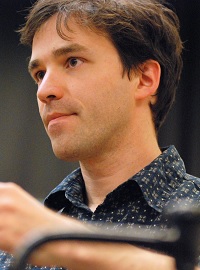
Patrick Keeling
Research Interests Research in the lab is generally related to the molecular evolution and cell biology of eukaryotes, in particular the protists (i.e., eukaryotes that are not animals, fungi, or plants). Protists are mostly single celled organisms, but are many are extremely complex and sophisticated despite their small size. Protists also represent the greatest part […]
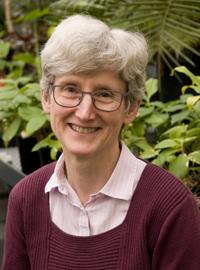
Mary Berbee
Research Interests Fungi can cause plant diseases, serve as mycorrhizal partners, and decompose litter and woody debris. Berbee lab research is directed towards understanding how fungi evolved and adapted to interdependence with land plants. Berbee lab projects, funded by the National Science and Engineering Research Council of Canadia include: • Analyzing evolution of the powerful […]
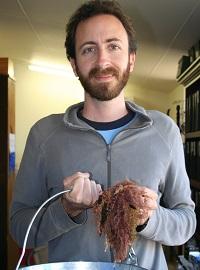

Jörg Bohlmann
Research Interests Plants are sessile organisms which have the ability to survive under constantly changing environmental conditions over lifespans of several weeks to hundreds of years. To cope with biotic or abiotic stress, plants have evolved a complex specialized metabolism which contains hundreds of thousands of unique small molecules. Many of these bioactive molecules have beneficial applications for […]
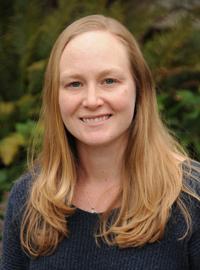
Laura Wegener Parfrey
Research Interests Research in the Parfrey lab focuses on the microbial ecology of eukaryotic microbes (protists) and bacteria. We work primarily in two distinct ecosystems: the mammalian gut and coastal ecosystems. Our gut microbiome research combines descriptive research with manipulative experiments to ask what is the ‘normal’ community of eukaryotic microbes (aka “parasites”) residing in […]
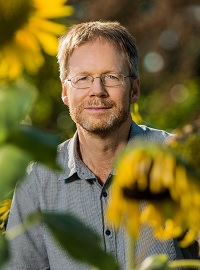
Loren Rieseberg
Research Interests My lab employs population genomic approaches, computational methods, and field and greenhouse studies to study plant adaptation and speciation. We are especially interested in how gene flow, both within and between species, influences these processes. We also study factors that affect rates of gene flow, including reproductive barriers such as niche differentiation, phenological […]
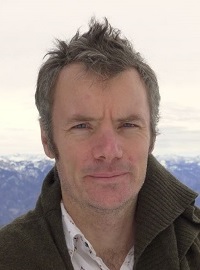
Jonathan Davies
Research Interests My research lies at the interface between ecology and evolutionary biology, making use of the information contained within phylogenetic trees to provide a bridge between them. The integration of phylogenetic approaches in ecology has been transformative, and has given rise to new sub-disciplines in biodiversity science, invasion biology, climate change biology, emerging infectious […]

Lacey Samuels
Research Interests The Samuels lab studies how plant cells secrete their cell walls, both the polysaccharides and specialized cell wall components such as lipids and lignin. Our approach is to integrate cell biology with molecular biology and biochemistry to put cell wall biosynthesis and secretion into a cellular context. All plant growth, including agricultural and forestry production, is […]

Naomi Fast
Research Interests Our research strives to understand genome evolution in single-celled eukaryotes, focusing on changes in genome size. As genomes are reduced in size, there are likely to be changes in the amounts of non-coding material. Of particular interest is the retention, reduction and/or removal of introns. Introns interrupt genes, and are removed from mRNA […]
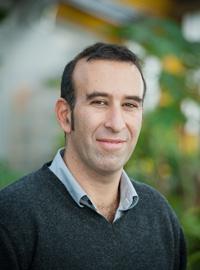
Philippe Tortell
Research Interests I am a sea-going oceanographer with broad interests in marine biogeochemical cycles. Current work in my research group focuses on understanding the biological, chemical and physical factors regulating oceanic primary productivity and the concentration of climate active gases including carbon dioxide (CO2), dimethylsulfide (DMS), methane (CH4) and nitrous oxide (N2O). My group has […]
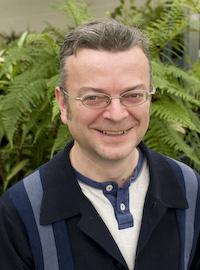
Sean Graham
Research Interests I have mentored 27 graduate students in my lab to date, and currently supervise six PhD and two MSc students. My lab group works on a broad variety of problems in plant systematics and evolution. Our work includes inference of the major details of the land-plant portion of the ‘Tree of Life,’ comparative genomics, […]
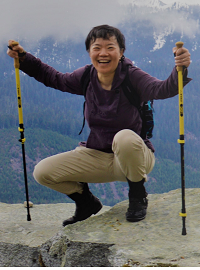
Xin Li
Research Interests The long-term goal of our research program is to understand the molecular mechanisms of plant innate immunity. We study plant defense against pathogen infection in the context of gene regulation, protein-protein interaction and signal transduction using the model organism Arabidopsis thaliana. Our program aims to discover new regulatory components of plant disease resistance and […]

Liang Song
Research Interests 1. Abscisic acid-regulated gene expression networks Animals often employ a fight-or-flight strategy when facing challenges. By contrast, plants handle challenges on site through many molecular, morphological, and physiological solutions. The plant hormone abscisic acid (ABA) is a nexus molecule of stress responses and plant development. Without proper ABA responses, plants would make unwise […]
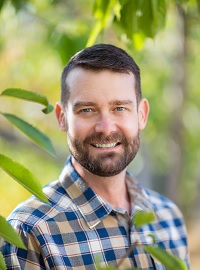
Sean Michaletz
Research Interests We are interested in the physical processes linking environmental variation to plant physiology, and how this “scales up” to influence higher-level patterns and processes. To investigate these topics, we use interdisciplinary approaches that draw upon fields such as physics, chemistry, engineering, and geoscience. Our work often involves development of mechanistic theory and models, […]

Brian Leander
Research Interests Our research concentrates on the discovery and characterization of marine organismal diversity and comparative studies of novel morphological systems in predatory eukaryotes (i.e., marine zoology & protistology). We are fundamentally interested in the diversity and evolution of organisms, particularly traits associated with feeding, locomotion and symbiotic interactions. By addressing specific hypotheses about trait […]
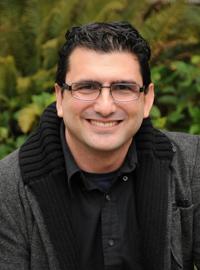
Abel Rosado
Research Interests Out of over a quarter of a million plant species, each of which contains complex and dynamic chemical make over, a mere fraction of one percent (1%) has been adequately investigated by western science. Yet, the human experimentation and exploration of plant medicines among Indigenous populations over millennia has created an extended catalog […]

Curtis Suttle
Research Interests There has been increasing interest in the biology and ecology of viruses and other pathogens that infect microalgae. Viruses that infect bacteria and phytoplankton play a key role in the dynamics of organisms and nutrients in marine and freshwater ecosystems, and consequently also affect nutrient and energy cycling. A primary research focus of […]

Geoffrey Wasteneys
Research Interests 1) The control of microtubule dynamics by microtubule-associated proteins.2) Microtubule polymer activities and the spatial organization of cortical microtubule arrays.3) The function of cortical microtubule arrays in the mechanical properties of cellulosic cell walls. Team Memebers Laryssa Halat, PhD CandidateMeng Li, PhD CandidateAida Rakei, PhD CandidateJayamini Jayawardhane, PhD CandidateSean Ritter, PhD CandidateBreanne Bali, […]
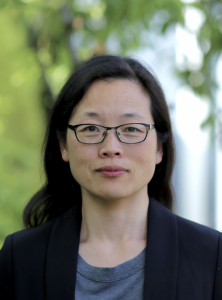
Michelle Tseng
Research Interests Plankton & Freshwater Ecosystems Insect Communities Team Members Selected Publications Google Scholar Profile: link* denotes undergraduate coauthors, please email for pdf requests

Jeannette Whitton
Research Interests I am a plant evolutionary biologist with interests that span the areas of population genetics, phylogenetics and speciation. For me, questions surrounding the nature of plant species are boundlessly interesting – How do populations of a species, scattered across hundreds or thousands of kilometers, maintain their genetic and evolutionary integrity? How do factors […]
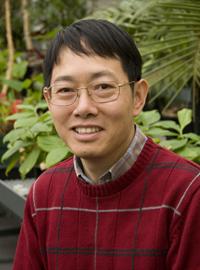
Yuelin Zhang
Research Interests Sensing and defending against microbial infections is essential to the survival of multicellular organisms. Recognition of PAMPs (pathogen-associated molecular patterns) or effector proteins from pathogens by plant immune receptors leads to activation of downstream signaling cascades and plant resistance to pathogens at the infection site. Activation of local defense further induces a secondary […]

Quentin Cronk
Research Interest Our lab integrates comparative genomics, molecular developmental biology and evolutionary biology to study plant form. We are interested in the how different morphologies evolve in plants, as well as the functional significance of morphological differences between species. Our model organisms for this include the Leguminosae (floral morphology) and black cottonwood, Populus trichocarpa (adaptive […]
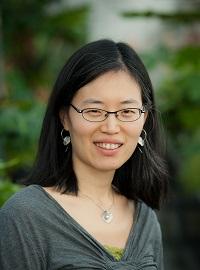

Pam Kalas
Teaching Interest Whether I am teaching a large first year lecture, a specialized upper-level seminar-style course, in a classroom or in a laboratory, my ultimate goals are to stimulate curiosity and critical thinking, and to help students become independent learners. As a scientist, I aim at adopting teaching practices that have been validated through rigorous […]
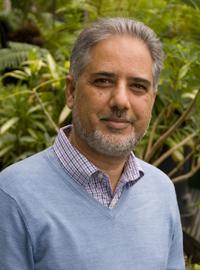
Santokh Singh
Teaching Interests My teaching philosophy centers on an active learning approach as I engage my students in critical thinking, problem-solving, scientific communication and experiential learning. These learning outcomes appear to be fundamental to transformative education. I believe that an effective teacher provides a catalyst for students’ learning by being passionate and enthusiastic for teaching and […]

Vivienne Lam
Teaching Interests My teaching philosophy is based on providing a welcoming environment for scientific learning and inquiry for students from diverse backgrounds. As I strongly believe in student-driven learning, I use a variety of active learning strategies and discussion-based approaches to encourage students to learn and to help each other develop critical thinking and effective […]
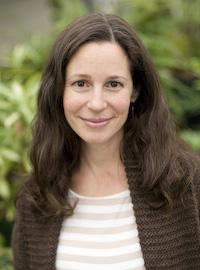
Amy Angert
Research Interests My lab group works at the interface of ecology and evolutionary biology. Much of our research focuses on the evolutionary ecology of species’ geographic distributions, asking what limits adaptation at the edges of species’ ranges, why closely related species vary by orders of magnitude in range size, and how ranges are likely to […]

Marco Todesco
Research Interests Plants have developed an incredible variety of strategies to survive to the different challenges they encounter in nature – harsh climates, lack of nutrients, herbivores, etc. The goal of our research is to obtain a comprehensive understanding of this adaptive diversity: how it mediates the interactions between plants and their environment, what are […]