

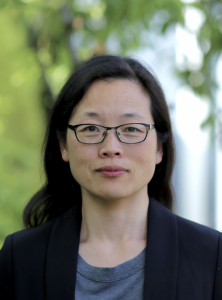
Michelle Tseng
Research Interests Research Team (updated March 2026) Selected Publications Google Scholar Profile: link Please email for pdf request

Keith Adams
Research Interests My research interests intersect among genomics, molecular evolution, and molecular genetics. My lab’s research is in the areas of genome evolution, molecular evolution, and gene expression – transcriptomics. We study how gene expression patterns, regulation, alternative splicing, and functions evolve. We focus on genes duplicated by whole genome duplication (polyploidy) and other duplication mechanisms at […]

Coralie Salesse-Smith
Research interests One aspect of ensuring future food security is the ability to produce more crop products using fewer resources – such as land, water, and fertilizer – in the face of climate change. In the Salesse-Smith lab, we are helping to address this challenge by using synthetic biology to study the molecular mechanisms of carbon […]
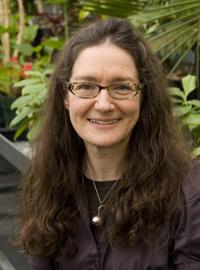
Jennifer Klenz
Teaching Interests Courses Taught/Teaching Community Work Growing Chefs, a local initiative to teach children about growing, cooking and eating plants Jennifer wearing plants used in cooking during lesson AND student’s aesthetic salad plate Selected Publications Klenz JE. 2024. Characterizing an Organism Through a Highly Adaptable Lab Jigsaw Activity. Article 30 In: Boone E andThuecks […]
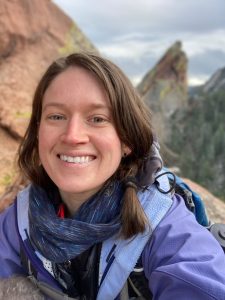
Courtney G. Collins
I am a Climate Change Research Ecologist in the Future Forests Ecosystem Centre (FFEC) at the BC Ministry of Forests and an Adjunct Professor in the Department of Botany at UBC. Research Interest My research takes a data-driven approach to understand the complex and interacting effects of global change on terrestrial biodiversity including species range dynamics, biotic interactions, phenology and […]
Jacob Moutouama
Research Interests We are interested in investigating the abiotic and biotic drivers of species’ distributions, with a focus on how global change influences species range limits and extinction risk. We are also interested in understanding the mechanisms underlying plants use by indigenous communities in tropical regions. Our research combines demographic data, manipulative lab and field experiments, and […]
Arif Ashraf
Assistant Professor • Assistant Professor, University of British Columbia, Canada (2025~)• Assistant Professor, Howard University, USA (2023-2024)• Postdoc, University of Massachusetts Amherst, USA (2019-2023)• Visiting scholar, The University of Tokyo, Japan (2017-2019)• Summer Intern, University of Saskatchewan, Canada (2016)• Ph.D., Plant Biology, Iwate University, Japan Email: arif.ashraf@botany.ubc.ca Office: Biological Sciences- South Wing- Room 2325Website: https://www.ashraflab.com/Publications: […]
Monika Fischer
Research Interests Monika is a mycologist who is passionate about understanding the biological mechanisms that drive ecological processes. Our lab seeks to understand what it means to be a fire-adapted fungus, and the role(s) that these fungi play during post-fire recovery. Fire-loving fungi are highly active within days following fire, including the model organism, Neurospora […]
Hélène Sanfaçon
Research Interests My research program is aimed at providing a molecular understanding of the replication cycle of plant viruses, with the long-term objective of designing new antiviral strategies. In particular, we are studying the function of viral proteins and the interaction between viruses and their host plants. Tomato ringspot virus (ToRSV) is a nepovirus and an […]
Andrew Riseman
Research Interests My research interests include understanding the role of plant genetics in the design of sustainable production systems, identifying relevant traits useful in these systems, combining them within superior germplasm, and integrating this germplasm into an optimized system. General areas of interest include plant breeding, intercrop interactions, nutrient use efficiency, root physiology, biotic and abiotic stressor resistance, and […]
Sandra Lindstrom
Research Interests One of the world’s most complex coasts extends from Puget Sound, Washington, through British Columbia and around the coast of Alaska. Repeated glaciation has acted like a species pump, creating a more diverse marine benthic seaweed flora than one would expect in a region so recently covered by ice. Although this area has […]

K. Patel
Professor Emeritus
Gilbert C. Hughes
28th February 1933 – 10th October 2010In memoriam by Iain Taylor Gil. Hughes was born in Homerville GA, and earned an undergraduate degree in Biology from Georgia Southern University 1953. Biology was the major but music was never far behind for Gil was an accomplished pianist and had a lifelong love of the works of Rachmaninoff and […]
Fred Sack
Fred David Sack (1947-2015) Fred David Sack was born on May 22, 1947 in New York City, the only child of Irving and Matilda (Trudy) Sack. Like many of his peers born in the wake of World War II, Fred was raised within the influence of the liberal Jewish tradition and the progressive tenets of […]
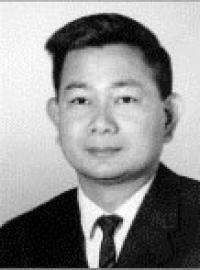
Thana Bisalputra
Thana Bisalputra passed away peacefully on June 13, 2009 in Surrey, British Columbia. He is survived by his brother, Thanit; his sister, Rasana; his sons Danai (and wife Angela) and Rabin; grandson, Jonathan; ex-wife, Alice-Ann; and several nieces and nephews in Thailand. Dr. Bisalputra was born January 6, 1930 in Thonburi, Thailand, the youngest of […]
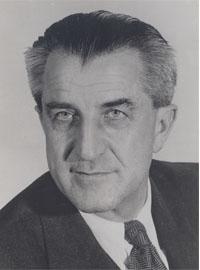
Vladimir Krajina
Vladimir Josef Krajina was born at Slavonice, Austria-Hungary (now Czech Republic) on 13th April 1905. He was educated at Charles University, Prague, where he graduated with the earned degree of D.Sc. cum laude in 1927. In World War II, he was a leader of the Czech underground resistance for which he received both military and […]
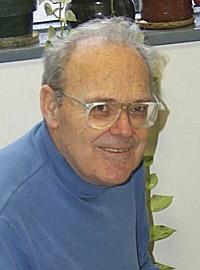
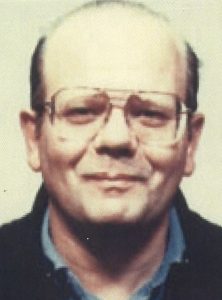
Luis Oliveira
Luis Oliveira (Lic. Oporto, PhD UBC) arrived at UBC Botany in 1970, to do a PhD with Thana Bisalputra. After completing his thesis on the ultrastructure of senescence during the culture of the brown alga Ectocarpus, he returned to Portugal for national military service, and then returned to Vancouver for post-doctoral work with Thana in […]
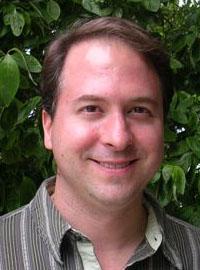
Greg Bole
It is with great sadness that the Botany Department shares the news that Associate Professor of Teaching Greg Bole died on Sunday, August 22, 2021. Greg excelled as an instructor, and we will miss our warm and willing friend and colleague. He was jointly appointed in the departments of Botany and Zoology. Greg’s love of […]
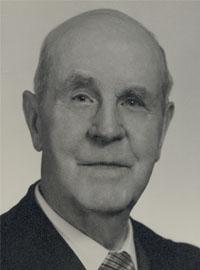
John Davidson
John Davidson (1878 – 1970). By: David Brownstein. Photo: http://botanyjohn.org/gallery/v/ubcbgslides/2005_680_0251.jpg.html Photo Caption: “John Davidson on Skwoach Mountain, ca 1915.” Photo Credit: University of British Columbia Botanical Garden and Centre for Plant Research, John Davidson Lantern Slide 251. John Davidson differed from most UBC faculty in that he never held any formal university degrees. He was born […]
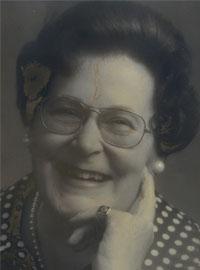
Kathleen Cole
By Dr. Robert Scagel Kay Cole spent her early years as a child in the small community of Wells (near Barkerville), later moving with her family to a home in the upper levels of West Vancouver. I first new Kay as a graduate student in the Department of Biology and Botany at U.B.C. We were […]
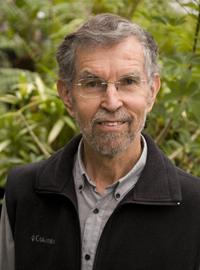
Paul J. Harrison
Paul J. Harrison grew up in Ontario on a farm and attended the University of Toronto. He moved to the Botany department at Guelph for an MSc in plant ecology. After he worked with Canadian University Students Overseas (CUSO) in Ghana and was posted to the coast, he found interests in Marine Biology. He did […]
Cara Haney
Research Interests Plants depend on their associated microbes for pathogen protection and nutrient uptake Arabidopsis root colonized by beneficial Pseudomonas fluorescens
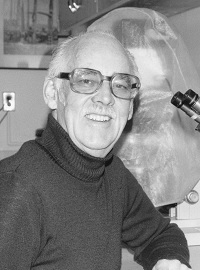
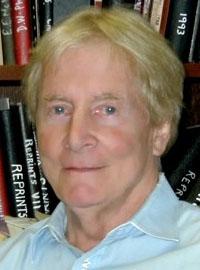
Neil Towers
Reprinted with permission from the Botanical Electronic News (click here to see original article on BEN) Neil Towers, a much respected scientist and Professor at the University of British Columbia, passed away on November 15th, 2004 in Vancouver. He was 81. Predeceased by mother Kathleen and brother Desmond, Neil will be lovingly remembered and sadly missed […]
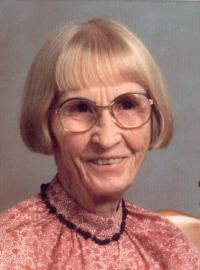
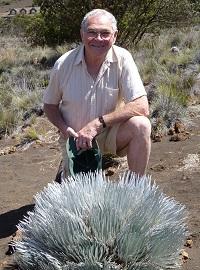
Bruce Bohm
Professor Emeritus
Carol Ann Borden
Instructor Emeritus
Terry Crawford
Instructor Emeritus
Robert DeWreede
Professor Emeritus
Ron Foreman
Professor Emeritus
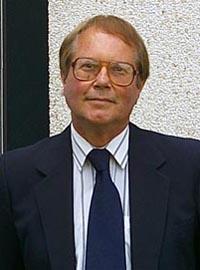
Fred Ganders
Professor Emeritus
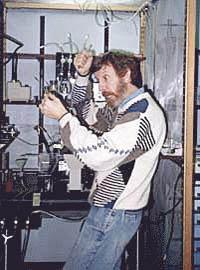
Anthony Glass
Physiology, biochemistry, and molecular genetics of inorganic ion transport across membranes of plant roots. Physiological aspects of hydroponic growth. Research Interests Plant nutrition involves the acquisition of the essential chemical elements, and their utilization for growth and development. Research in my laboratory is focussed upon membrane transport processes responsible for transferring inorganic ions (particularly K+, […]
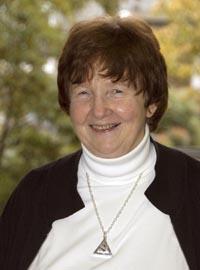
Beverley Green
Genomics, molecular evolution and chloroplast protein import in algae with chlorophyll c (diatoms, dinoflagellates and other chromists). Evolution of genes for light-harvesting antenna proteins and their stress-induced relatives. Photoacclimation in diatoms. Replication and transcription of minicircular chloroplast genes in dinoflagellates. Research Interests All my research is concerned with chloroplasts, the photosynthetic organelles of eukaryotic cells. […]