


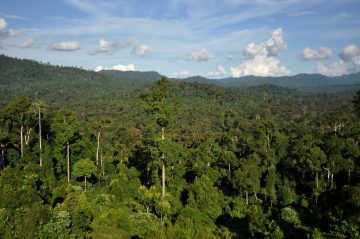
Predicting how plants will fare in the heat is not so easy
Anticipating how plants will respond to rising temperatures is critical—not just for plants, but for whole ecosystems. How organisms respond to heat is often studied at small scales—such the behavior of a single leaf or branch—and then extrapolated to predict what might happen across whole ecosystems. But according to a new review article published in Science by […]
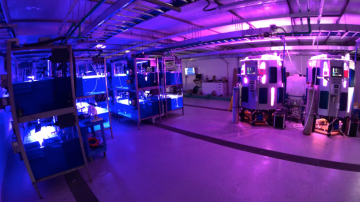
The Connection Between Climate Change and the Pacific Oyster Microbiome and Mortality
Part of our April is Earth Month series Shifting ocean conditions can influence the species forming both the oyster’s external ecosystem and internal community of microorganisms. By Sarah Anderson, PhD Although they don’t produce the shiny, precious pearls of some of their mollusk family members, Pacific oysters remain a critically valuable resource. The Pacific oyster […]
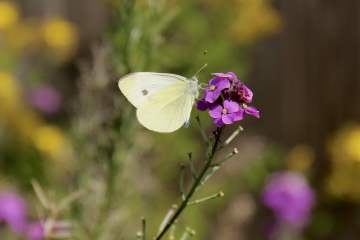
The mystery of the missing butterflies in Vancouver
Dr. Michelle Tseng, botany and zoology professor, discusses what may have happened to all the butterflies, and what we can do to help. Alex Walls Jun 25, 2024 A Cabbage White butterfly rests on a flower. Photo credit: Dr. Michelle Tseng A wet, cool spring and spraying for invasive insects may be the reasons behind […]
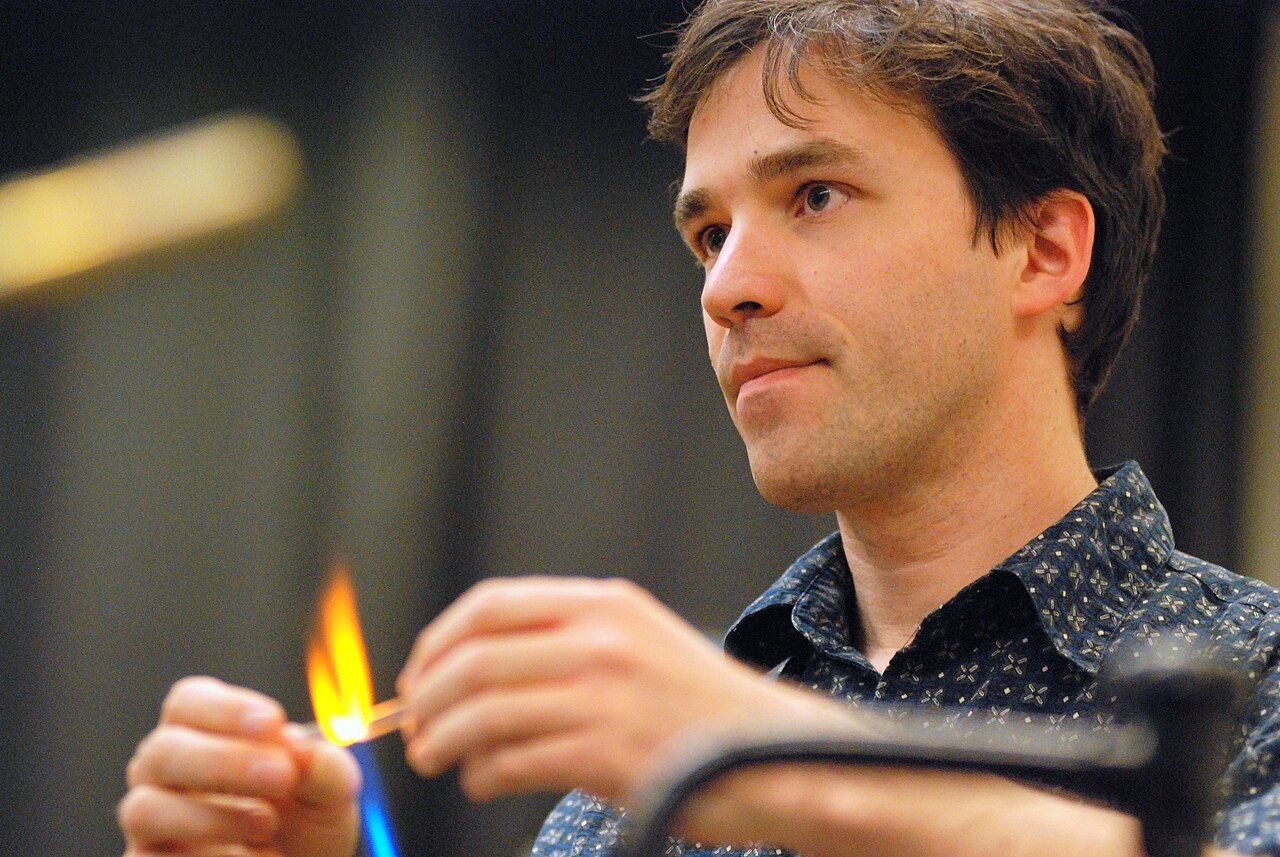
Patrick Keeling has been elected to the U.S. National Academy of Sciences. Election to the National Academy is one of the highest honours in science.
Patrick Keeling’s research program has illuminated fundamental properties of the evolution and diversity of algae, and microbial life in general. His prolific work has covered a broad range of biodiversity and disciplines, and had major impacts on our understanding of the tree of life, horizontal gene transfer, symbiosis, parasitism, and the evolution of the complex […]
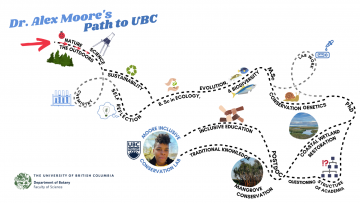
What you can learn from Dr. Alex Moore’s career path
Image and write-up by Nivretta Thatra As of summer 2022, Dr. Alex Moore (she/they) is an Assistant Professor co-appointed at UBC Botany and the Faculty of Forestry. We are thrilled to be working with them! Moore’s research programme currently focuses on predator-prey interactions in mangrove forests throughout the tropics and will begin to include restoration […]
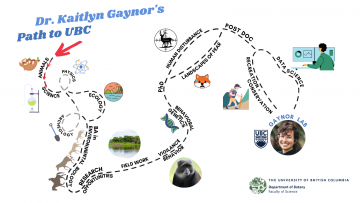
Advice for young scientists from Dr. Kaitlyn Gaynor
For Dr. Kaitlyn Gaynor (she/her), Assistant Professor in UBC’s Departments of Botany and Zoology, being able to do research was a key moment of transition in her journey to becoming a scientist. “I had spent so much time in school reading other peoples’ work. When I began exploring research opportunities in undergrad, I realized that […]
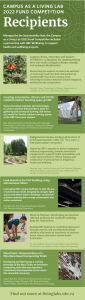
Winner of the 2022 Campus as a Living Lab Fund Competition
Congratulation to Michelle Tseng and her collaborators on being one of the recipients of the 2022 Campus as a Living Lab Fund Competition, which this year partnered with Wellbeing to expand the opportunities provided through the competition and support more projects advancing new ideas and innovations in Wellbeing, for their project Campus Trees, Microbes and Insects (CTMAIN): […]

Celeste earns West Coast teaching award
Dr. Celeste Leander, Professor of Teaching in the Departments of Botany and Zoology, has received a 2023 West Coast Teaching Excellence Award. The honour, awarded to top post secondary teachers in British Columbia and the Yukon by the BC Teaching and Learning Council (BCTLC), recognizes Dr. Leander’s deep commitment to student-centred teaching. “Celeste makes brave […]
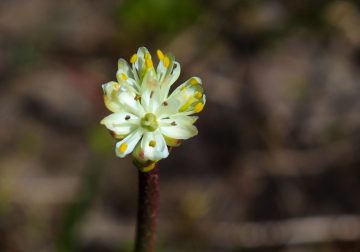
First new carnivorous plant identified in 20 years
The delicate stalk and pretty white flowers of Triantha occidentalis may seem like the perfect place to perch if you’re an insect, but get trapped in its sticky hairs and it will suck the nutrients from your dead corpse. That’s the surprising new finding by University of British Columbia and University of Wisconsin-Madison researchers, detailed in PNAS. Triantha – […]
Supergenes play a larger role in evolution than previously thought
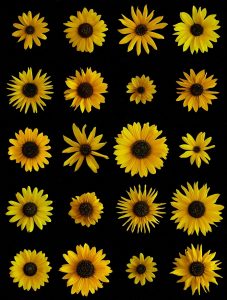
Massive blocks of genes—inherited together ‘plug and play’ style—may play a larger role in evolutionary adaption than previously thought, according to new research in Nature. Biologists identified 37 of these so-called ‘supergenes’ in wild sunflower populations, and found they govern the modular transfer of a large range of traits important for adaptation to local habitats. Those […]
Sorting out the Cells Sorting Centre
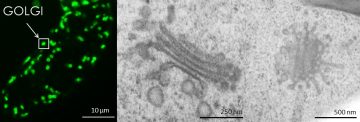
Article by: Miranda Meents (Lacey Samuels lab) 2015 is somewhat of an anniversary in cell biology. 350 years ago, Robert Hooke published the first description of what he called a cell. But it wasn’t until the mid-19th century that we started to look inside cells. Then, in 1898, the Italian scientist Camillo Golgi first described, and […]
Using leaf stomatal counts to estimate CO2 levels during the Pliocene
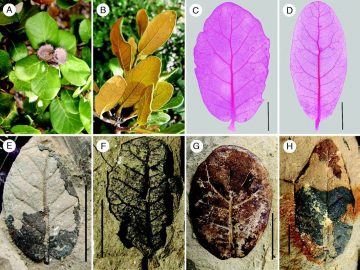
Article by Jin-Jin Hu (Turkington & Zhou lab) We have been collaborating with colleagues in Yunnan Province, China to determine if stomatal frequency in Quercus guajavifolia could be used to estimate palaeo-CO2 levels. The work was spear-headed by Jin-Jin Hu and Zhe-Kun Zhou at the Key Laboratory for Plant Diversity and Biogeography of East Asia, Kunming, and at […]

Viruses-lots of them-are falling from the sky
Viruses and bacteria fall back to Earth via dust storms and precipitation. 2011 dust storm in the Sahara. An astonishing number of viruses are circulating around the Earth’s atmosphere – and falling from it – according to new research from scientists in Canada, Spain and the U.S. The study marks the first time scientists have […]
Spawn of the triffid? Tiny organisms give us glimpse into complex evolutionary tale
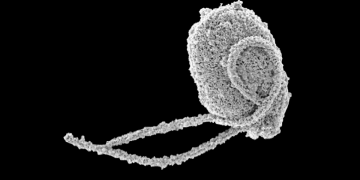
Two newly discovered organisms point to the existence of an ancient organism that resembled a tiny version of the lumbering, human-eating science fiction plants known as ‘triffids,’ according to research in Nature. The microscopic protists Rhodelphis limneticus and Rhodelphis marinus are genetically ‘sisters’ to red algae, but couldn’t be more different. Red algae are fleshy, large organisms with a simple […]
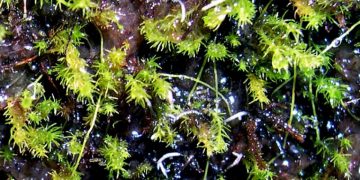
Collecting the Impossible moss: BC species key to charting 1 billion years of plant evolution
An international team of researchers have completed a massive effort to sequence genes from more than 1,100 plant species—an undertaking that saw UBC botanists collect rare mosses from remote corners of BC, and travel to the South Pacific to collect parasitic plants. “One of the crucial samples we wanted to include was a parasitic conifer […]
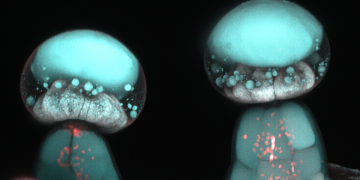
The frostier the flower, the more potent the cannabis
Cannabis flowers with the most mushroom-shaped hairs pack the biggest cannabinoid and fragrance punch, according to new research from the University of British Columbia. While the cannabis leaf is iconic, it’s the chemicals produced by the tiny, frostlike hairs on cannabis flowers that give the plant its psychoactive and medicinal properties and distinctive smell. In […]
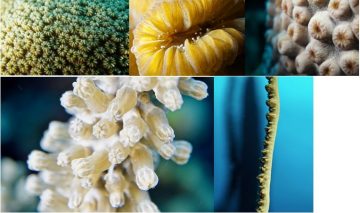
Dive into the mysterious connection between malaria and coral reefs – Patrick Keeling
For most of us, microbes mean only one thing: disease. Disease-causing microbes are actually the extreme minority of the most abundant form of life on Earth. But because of their immediate and direct importance to our health, they are much better studied than the rest of the microbial world. Still, new discoveries about the basic […]

Viruses have helped to sculpture life and the world we live on
By 2019 Wall Scholar Curtis Suttle, a Professor and Fellow of the Royal Society of Canada at the University of British Columbia, where he shares an office with billions of viruses. The novel coronavirus, SARS-CoV-2, is just the latest in what seems to be a never-ending war against the spread of viral diseases; Measles, Influenza, HIV, […]
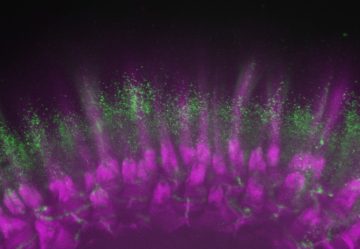
Exploring cell wall structure and function with seed coat mucilage
Article by George Haughn The primary plant cell wall of land plants is an essential cellular structure needed for support, cell-cell adhesion, signaling and interaction with both the biotic and abiotic environment. It is composed of a complex, dynamic extracellular matrix consisting of a network of carbohydrate polymers (cellulose, hemicellulose and, pectin) and structural proteins. Wall […]
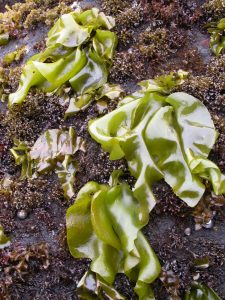
Biomechanical consequences of branching in flexible, wave-swept macroalgae
Article by Samuel Starko and Patrick Martone What physical factors influence the morphological variation of plants? How do different morphologies coexist, if they perform similar ecological roles? Marine, non-vascular plants (seaweeds) live in some of the most physically stressful habitats on the planet: wave-swept rocky shores. Seaweeds are constantly bombarded with powerful waves that can rip […]
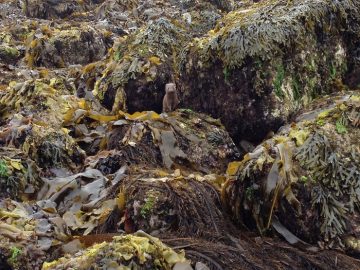
Seaweed Diversity on Calvert Island, British Columbia
Article by Katy Hind, Sandra Lindstrom, and Patrick Martone It is estimated that we have described only 10-20% of species diversity on Earth. In particular, floristic surveys using modern molecular techniques have revealed that we are vastly underestimating the number of seaweed species. This finding has implications for researchers using classical methods of identification and is likely […]
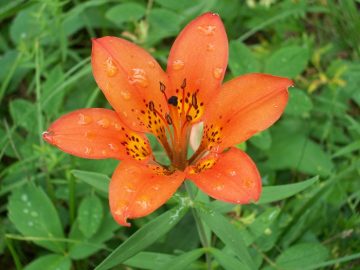
How do plants make exceptionally long lipids for their cuticles?
Article by Tegan Haslam (Kunst Lab) The transition of plants to life on land required many adaptations for survival in an environment so radically different from the sea. Perhaps the most challenging aspect of terrestrial life is the necessity of retaining water, which makes up more than 70% of most non-woody plant parts. Plants have […]
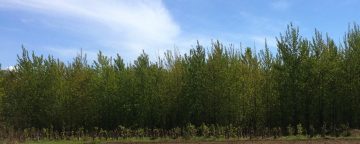
Update on plant sex: breakthrough discovery in poplars
Article by Carl Douglas Do plants have different sexes, meaning distinct male and female individual organisms within a species? The separation of male and female sexual function into different individuals is called “dioecy” and is common in eukaryotes, occurring in 94% of animals. Yes – this occurs in plants but in contrast to animals it is […]
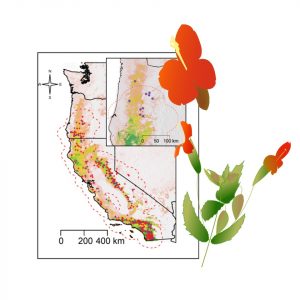
Mapping a species niche and its distribution
Article by Matthew Bayly (Angert Lab). A current important area of research effort involves understanding how species’ geographic distributions and range limits will respond to climate change. But for most species of interest we lack basic data on how their fitness changes along climatic gradients. In many cases distribution data from atlases, herbarium specimens and vegetation […]
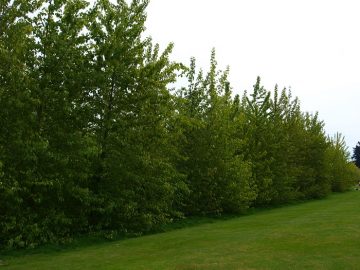
The ‘Engineering’ Behind Hybrid Trees
Figure 1. Five years old Populus trichocarpa trees at Totem Field collection, UBC. Article by Adriana Suarez-Gonzalez (Douglas lab) If you are reading this article, then you survived your birth, acclimated to rainy and cold weather and have successfully battled a number of flu viruses. The same happens in trees, but because plants are stationary and can’t […]
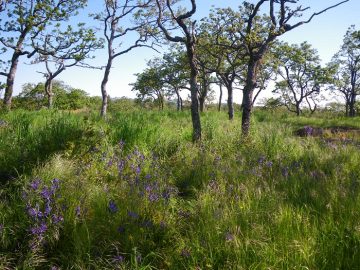
Are Canada’s Species At Risk recovering?
Article by Bill Harrower, Jenny McCune, and Jeannette Whitton National level endangered species laws are designed to prevent species from going extinct. Canada’s endangered species law, the Species At Risk Act (or SARA), was enacted almost 13 years ago1. Associate Professor Jeannette Whitton led a group of 14 students and researchers from the UBC Botany Department, the […]
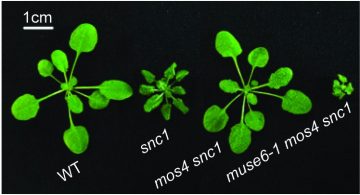
Preventing autoimmunity in plants
Article by Xin Li lab Like animals, plants are constantly exposed to bacteria, viruses, and fungi that have the potential to cause diseases. To remain healthy plants possess a complex immune system which relies on immune receptors that are able to recognize pathogens and respond before an infection is established. If a pathogen is able to avoid […]
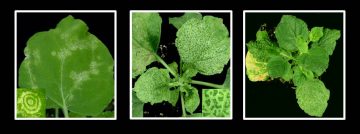
How do interactions between plants and viruses influence symptom severity?
Article by Hélène Sanfaçon Plant viruses can cause significant economic losses in cultivated plants by inducing visual symptoms that affect plant productivity. However, there are also many viruses that co-exist with their hosts without inducing significant symptoms. Symptom severity is determined not only by the ability of viruses to multiply and to disrupt the physiology […]
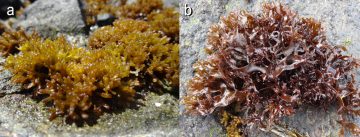
Sequencing of historic and modern specimens reveals cryptic diversity in the red alga Nothogenia
Article by Sandra Lindstrom, Paul Gabrielson, Jeff Hughey, Erasmo Macaya and Wendy Nelson. This project is not something I ever envisioned. How did someone who is interested in the biogeography and phylogeny of seaweeds occurring on the West Coast of North America end up leading a project that revised the taxonomy of a genus of […]
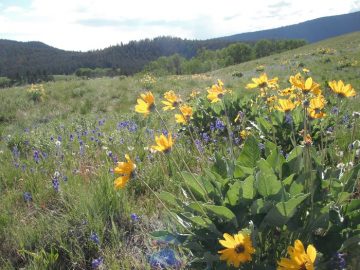
How would grasslands change in response to the loss of song birds and small mammals?
Article by Bill Harrower, Lauchlan Fraser and Roy Turkington Grasslands of British Columbia’s southern interior mountains provide stunning landscapes and host many of the provinces at risk species of plants and animals. Hot dry sagebrush and bunchgrass ecosystems occupy the valley bottoms and grade to the cool wet grasslands with increasing elevation. The structure of […]
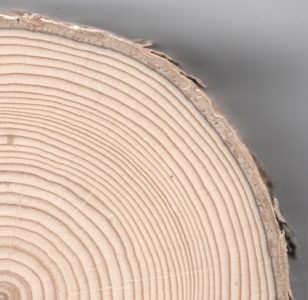
Occam’s tree: the simple way that trees and other plants move billions of tons of lignin
Article by the Samuels lab Trees and other plants need strength to stand upright and move water effectively from their roots to their leaves. That strength comes from the cell walls that plant cells build around themselves as they grow. Cell wall material makes up most of the mass of plants. Trees that live for […]
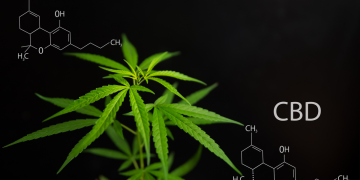
Researchers ID the high-efficiency hacks cannabis cells use to make cannabinoids
Originally published by UBC Science on August 2, 2022 For the first time, plant biologists have defined the high-efficiency “hacks” that cannabis cells use to make cannabinoids (THC/CBD). Although many biotechnology companies are currently trying to engineer THC/CBD outside the plant in yeast or cell cultures, it is largely unknown how the plant does it naturally. “This really […]
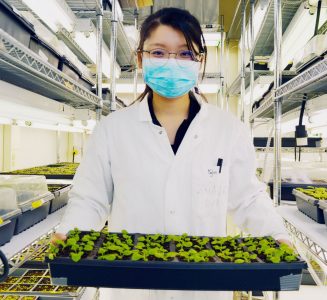
Uncertainty in the research process is a source of excitement for Yujun Peng, Dewar Cooper Fellowship recipient
Yujun Peng, a member of Dr. Yuelin Zhang’s lab group, was recently awarded the Dewar Cooper doctoral fellowship for her work on the salicylic acid hormone signaling pathway. Her lab group focuses on how plant immune responses are regulated against the pathogen invasion, and early studies show that salicylic acid plays an essential role in […]
Elizabeth Mahon, Jonathan Page Fellowship awardee, finds satisfaction in scientific problem-solving
Elizabeth Mahon, PhD student in the lab group of Dr. Shawn Mansfield, was awarded the Jonathan Page Fellowship for her research on the biochemistry of the wood of poplar trees. The goal of her project is to engineer poplar trees for use as feedstock for renewable bioproducts like biofuels, pulp and paper. The Jonathan […]
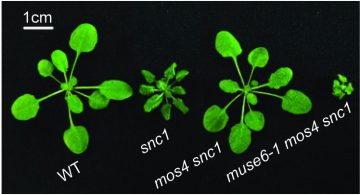
Preventing autoimmunity in plants
Article by Xin Li lab Like animals, plants are constantly exposed to bacteria, viruses, and fungi that have the potential to cause diseases. To remain healthy plants possess a complex immune system which relies on immune receptors that are able to recognize pathogens and respond before an infection is established. If a pathogen is able to […]
New branch on tree of life includes ‘lions of the microbial world’
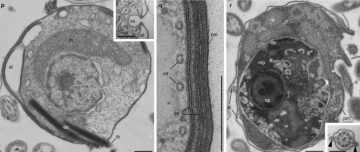
On the left is a starving provoran. On the right, it has engulfed its prey. Photo Credit: Tikhonenkov, Mikhailov, Gawryluk, Belyaev, Mathur, Karpov, Zagumyonnyi, Borodina, Prokina, Mylnikov, Aleoshin, and Keeling, Nature There’s a new branch on the tree of life and it’s made up of predators that nibble their prey to death. These microbial predators […]
Grassroots effort champions inclusive language in science
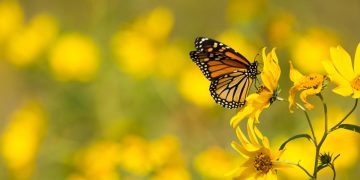
A new grassroots effort—announced this month in Trends in Ecology and Evolution—is calling for a reevaluation of some terminology used in ecology and evolutionary biology (EEB) to make it more inclusive and precise. The initiative, the EEB Language Project was launched by like-minded scientists across the United States and Canada, including three University of British Columbia researchers—Dr. Kaitlyn […]
This parasitic plant convinces hosts to grow into its own flesh
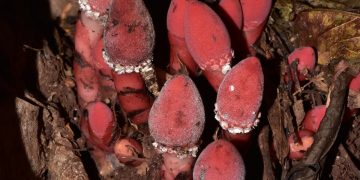
Dr. Chen and colleagues—including University of British Columbia botanist Dr. Sean Graham—compared the genomes of Balanophora and Sapria, another extreme parasitic plant in the family Rafflesiaceae that has a very different vegetative body. The UBC science summary: https://science.ubc.ca/news/parasitic-plant-convinces-hosts-grow-its-own-flesh
HOW TO FORAGE FOR MUSHROOMS – SAFELY AND LEGALLY – THIS FALL
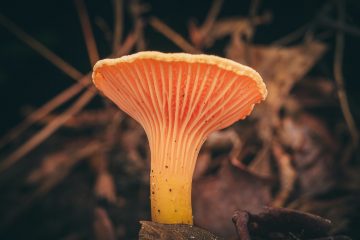
It’s prime sprouting time in British Columbia for many a species of fungi, so aspiring mushroom hunters may be wondering just how to go about picking a patch of porcini. Dr. Mary Berbee, professor in the UBC department of botany, discusses how to safely and legally forage for mushrooms around the city this fall. More […]