


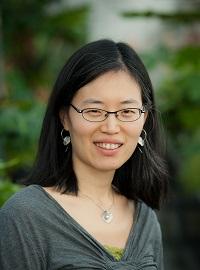
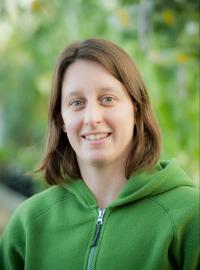
Pam Kalas
Teaching Interest Whether I am teaching a large first year lecture, a specialized upper-level seminar-style course, in a classroom or in a laboratory, my ultimate goals are to stimulate curiosity and critical thinking, and to help students become independent learners. As a scientist, I aim at adopting teaching practices that have been validated through rigorous evidence-based research. To educate myself about such practices, I regularly participate in science teaching and learning events, discussion groups, as well as education conferences and other off-campus professional development activities. I am always keen on experimenting with new activities and strategies in my classrooms, and I […]
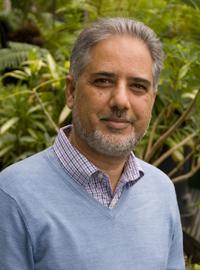
Santokh Singh
Teaching Interests My teaching philosophy centers on an active learning approach as I engage my students in critical thinking, problem-solving, scientific communication and experiential learning. These learning outcomes appear to be fundamental to transformative education. I believe that an effective teacher provides a catalyst for students’ learning by being passionate and enthusiastic for teaching and learning. I strive to stimulate my students’ intellectual growth and higher learning by focusing on student-centered and research-based teaching and learning methods. I have introduced new methods and tools for student assessment. For example, I have developed and introduced a student assessment method using short presentations […]
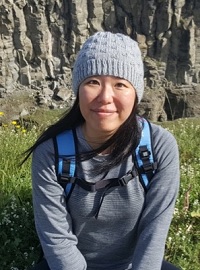
Vivienne Lam
Teaching Interests My teaching philosophy is based on providing a welcoming environment for scientific learning and inquiry for students from diverse backgrounds. As I strongly believe in student-driven learning, I use a variety of active learning strategies and discussion-based approaches to encourage students to learn and to help each other develop critical thinking and effective science communication skills. I believe that my role as an instructor is to facilitate learning through understanding, rather than rote memorization: I like to use ‘real life’ examples (from news articles, or social/internet-based media) to convey concepts taught in the classroom and to illustrate how they […]
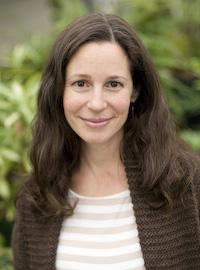
Amy Angert
Research Interests My lab group works at the interface of ecology and evolutionary biology. Much of our research focuses on the evolutionary ecology of species’ geographic distributions, asking what limits adaptation at the edges of species’ ranges, why closely related species vary by orders of magnitude in range size, and how ranges are likely to shift in response to climatic changes. Another line of inquiry focuses on population and community dynamics and mechanisms of species coexistence. These different projects are united by a focus on mechanisms of, and constraints on, niche evolution, and the consequences of divergence in niche properties for […]

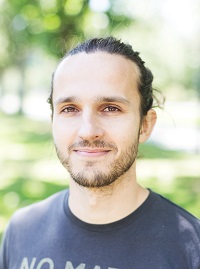
Marco Todesco
Research Interests Plants have developed an incredible variety of strategies to survive to the different challenges they encounter in nature – harsh climates, lack of nutrients, herbivores, etc. The goal of our research is to obtain a comprehensive understanding of this adaptive diversity: how it mediates the interactions between plants and their environment, what are the genes and genetic variants controlling it, and how it can contribute to producing crops that are more sustainable, more resilient, and more productive. We do this by using a combination of genomics, quantitative genetics, molecular biology, developmental and evolutionary biology, ecology and field experiments, working mostly […]
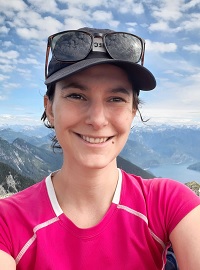
Rachel Wilson
Teching Interests As an ecology instructor and lab coordinator, I endeavour to inspire interest and excitement about the natural world. Ecology is a complex discipline that encapsulates numerous processes occurring at a variety of scales. This makes for a diverse learning experience, but also provides unique challenges for undergraduate students to navigate. Accordingly, I cultivate an upbeat and open-minded environment in the classroom, where learning can happen collaboratively. I also emphasize the importance of building critical thinking and analytical skills, within and beyond the classroom. Courses Taught/Teaching