
In Memoriam

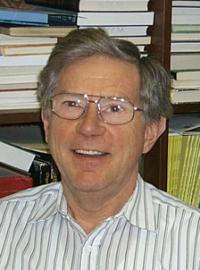
Dr. Iain E.P. Taylor, professor emeritus
August 18, 1938 – October 3, 2026
Botanist, Teacher, Editor, Historian, Mentor
The botanical and scientific communities have lost one of their most dedicated advocates with the passing of Professor Emeritus Iain Edgar Park Taylor, whose career and volunteer service helped shape botanical science, scientific publishing, and scholarly communities in Canada for more than five decades.
Born in Chester, England, on August 18, 1938, Iain Taylor’s academic journey began at the University of Liverpool, where he earned his undergraduate and doctoral degrees in Botany. Iain and his wife Sylvia emigrated to Canada in 1968, when Iain joined the Department of Botany at the University of British Columbia.
Over the course of a distinguished career at UBC, Iain became recognized as an outstanding teacher, researcher, administrator, and mentor. He played a leading role in redesigning introductory biology education and remained deeply committed to undergraduate teaching throughout his career. He supported students in the classroom and laboratory as well as an advisor in the Dean of Science Office. Over his career he supervised fourteen Ph.D. students, several Master’s students, and numerous undergraduate researchers who went on to make contributions of their own to botanical science and higher education. His early research on plant and fungal cell walls helped establish analytical approaches that became widely adopted within the field. Later collaborations integrating botany, biochemistry, and physics advanced understanding of plant cell wall structure and development. He also served as Head of the Botany Department in the 1990s, and again as Acting Head in the early 2000s.
While Iain’s scientific accomplishments were substantial, many colleagues remember him most for his devotion to the broader scientific enterprise: the values, institutions, and people that make scholarship possible.
Nowhere was this more evident than in his long association with the Canadian Botanical Association (CBA/ABC). A member from 1969, he devoted extraordinary energy to strengthening the organization through service, leadership, and vision. Over the years he served as Director, Vice-President, Secretary, President-Elect, President (1985–86), and Past-President. His influence extended far beyond these titles. He helped guide the incorporation of the Association in 1979, authored its Policy Manual, established systems that improved governance and continuity, promoted communication among members, and championed student participation through initiatives that eventually became the John Macoun Travel Bursary.
In recognition of these contributions, he received the Mary E. Elliott Service Award in 1989, one of the Association’s highest honours. The nomination supporting that award described him as an innovator, institutional memory, recruiter, mentor, and tireless advocate for Canadian botanists. It observed that many members identified the Association itself with Iain because of his enthusiasm, generosity, and unfailing willingness to welcome newcomers, particularly students and early-career scientists.
His commitment to students remained a defining characteristic throughout his life. Long before mentorship became a widely discussed aspect of academic culture, Iain understood that the future of science depended on supporting those just entering the profession. He encouraged young researchers to attend conferences, engage in professional organizations, publish their work, and participate fully in scientific communities.
A second major pillar of his legacy was scholarly publishing.
For decades, Iain worked to improve the quality, integrity, and accessibility of scientific communication. He served as an Associate Editor and later Editor-in-Chief of the Canadian Journal of Botany, leading the journal throughout much of the 1990s. From 1991 to 2006, he served as Assistant Editor-in-Chief for the NRC Research Press journals, helping shape editorial standards across numerous scientific publications. In addition to his work with Canadian journals, he served on multiple editorial boards and became an internationally respected instructor in scientific writing, editorial practice, and publication ethics.
As the scholarly publishing landscape evolved, Iain became increasingly interested in issues of publication ethics, authorship, peer review, intellectual property, and professionalism in science. He was among the early voices advocating for transparent editorial practices and responsible research conduct. Through workshops, lectures, and mentoring, he helped demystify scientific publishing for thousands of students, researchers, editors, and reviewers. As founder of the UBC Editors’ Network and a frequent lecturer on scientific writing and editorial practice, he worked with researchers and journals across Canada and internationally. His workshops helped generations of scientists learn not only how to publish their work, but how to participate ethically and constructively in the scientific enterprise.
His influence reached far beyond Canada. Colleagues sought his guidance internationally because of his rare ability to combine editorial expertise with practical wisdom and encouragement. Whether working with scientific journals in Canada, supporting editorial networks at UBC, or conducting workshops abroad, he was known for helping authors and editors understand not only how scientific publishing worked, but why integrity, fairness, and professionalism mattered.
Even after retirement, he remained remarkably active. Appointed Professor Emeritus in 2003, he continued his work through the UBC Botanical Garden, where he served as Research Director, Acting Director, and Editor of Davidsonia, a publication he helped revive and sustain. He became deeply engaged in documenting the histories of the UBC Botanical Garden, the Department of Botany, and the Faculty of Science. What began as an effort to organize archival materials evolved into a major contribution to preserving institutional memory for future generations, including extensive historical work associated with the UBC Centenary Project. Much of this work has now been preserved within the UBC Archives.
His love of learning was matched by a love of people. Colleagues frequently remarked on his warmth, curiosity, humour, and generosity. He was as comfortable speaking with students as with senior scholars and delighted in helping others succeed. Throughout his career and retirement, he remained deeply interested in the lives and careers of former students, colleagues, and collaborators, many of whom became lifelong friends.
Many who encountered Iain through the Canadian Botanical Association, scientific journals, or university life remember not a title or accomplishment, but a conversation. He had a gift for making newcomers feel welcome and valued. Students, early-career researchers, and first-time conference attendees often found in him an enthusiastic advocate, ready with encouragement, practical advice, and introductions to colleagues who might help them along the way. Whether at a conference, in a classroom, in an editorial office, or over coffee, he generously shared his time, knowledge, and enthusiasm. For countless students and colleagues, Iain’s mentorship began with a simple conversation and often continued for years thereafter.
Outside science, Iain’s interests were equally rich. He was a dedicated singer who participated in choirs throughout his life and became an enthusiastic supporter of the UBC Opera Ensemble in retirement. He was an avid railway enthusiast, an accomplished stamp collector, and a lifelong supporter of rugby. At UBC he coached the Frosh rugby team and later helped organize the team’s memorable tour of Scotland and Ireland in 1987. He also served for many years with BC Rugby.
Perhaps most importantly, he shared these passions with Sylvia, his wife and partner of nearly six decades. Together they were beloved figures within the Canadian Botanical Association community. Their longstanding encouragement of students and young scientists was later recognized through the establishment of the Iain and Sylvia Taylor Award, presented annually for outstanding student poster presentations at the Association’s conference. The award reflects two values that defined their lives: fostering excellence and supporting the next generation.
Iain Taylor leaves behind a legacy measured not only in publications, offices held, awards, and accomplishments, but also in the students he mentored, the colleagues he encouraged, the institutions he strengthened, and the communities he helped build.
His influence continues wherever a young scientist presents a first poster, a manuscript is improved through careful editing, a journal maintains high ethical standards, or a botanist extends a welcoming hand to someone new.
That, perhaps for him, is the most enduring measure of a life devoted to science.